Internal Knowledge Base
Designing a shared memory
The problem wasn’t too much information.
It was information without a home.
As Hy-Vee grew, every department developed its own way of working. Research lived in one place. Meeting notes somewhere else. Onboarding documents disappeared into old folders. Project plans were duplicated, renamed, and reorganized depending on who created them.
The organization had plenty of knowledge.
It just wasn't easy to find, understand, or maintain.
Our challenge was to create enough structure to bring 18 departments together without making everyone work the same way.
LISTENING BEFORE ORGANIZING
I worked as part of a three-person UX Operations team, meeting with leaders, managers, and the people actually creating and searching for information every day.
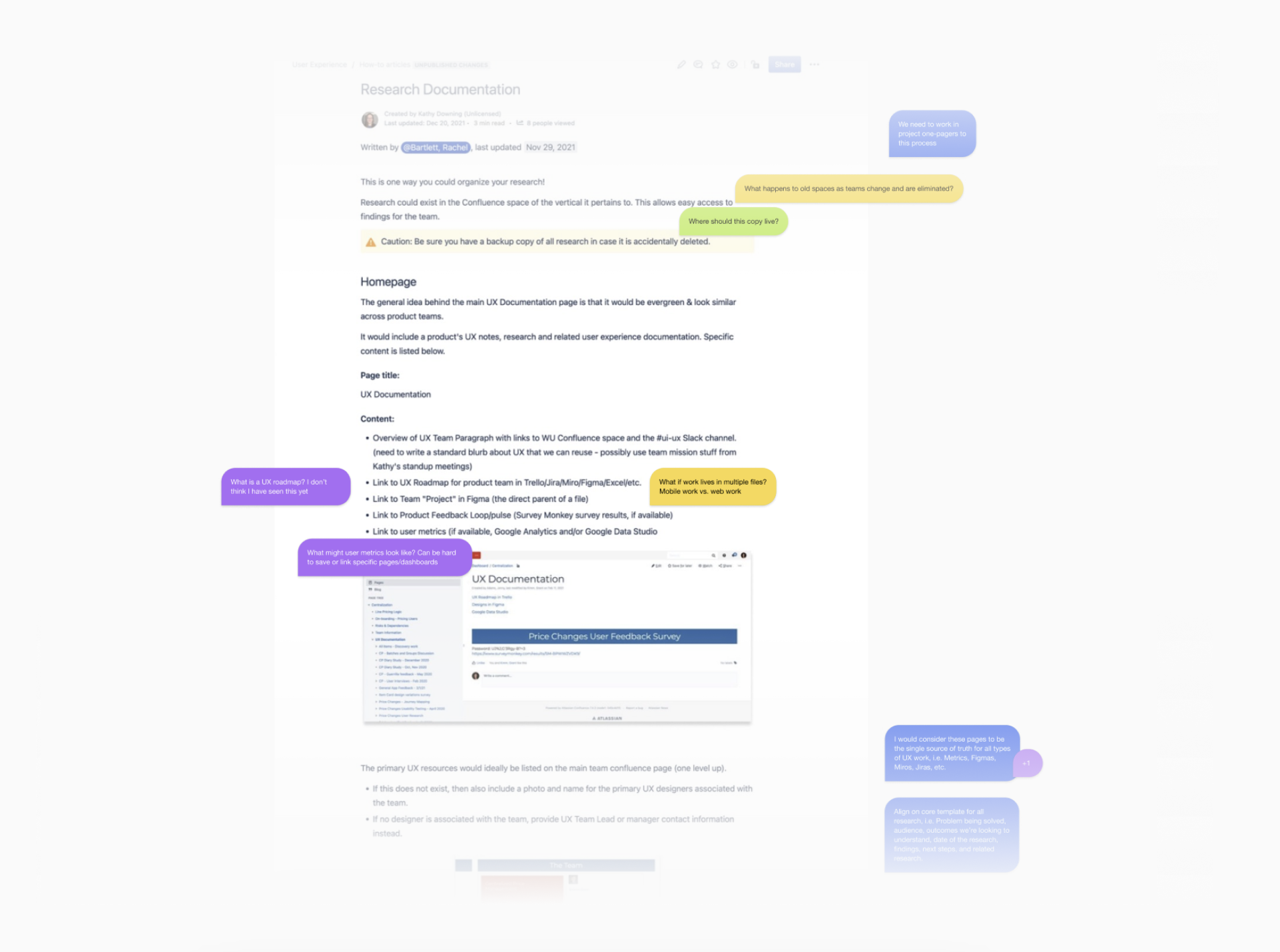
We audited existing spaces, traced duplication and broken structures, and looked for the patterns underneath the mess.
We also studied the departments that were already doing this well.
Instead of starting from scratch, we asked:
What is already working and how can we make it repeatable?
![Screenshot of a presentation slide with the title 'Naming Conventions'. It lists three items: 'Meeting Notes - [MON YYYY]', 'Journey Map - [Epic Name]', and 'Discovery Work - [Project Name]'.](https://images.squarespace-cdn.com/content/v1/63f7d83019e4d003912dc553/58837b21-1547-4ad1-9b18-5cd814a48919/Screenshot+2026-04-29+at+3.14.37+PM.png)
A SYSTEM, NOT A FOLDER TREE
The solution became a shared information architecture that defined how different types of work related to one another.
We created:
01
Common structures
for recurring types of information.
02
Reusable templates
that reduced the effort required to create and maintain documentation.
03
Naming conventions
that made content easier to recognize and search.
04
Governance patterns
that helped the system stay useful as teams and information changed.
The structure was intentionally flexible.
Every department could still speak its own language.
They just had a common grammar.
DESIGNING FOR THE PEOPLE WHO COME AFTER
A system like this isn't finished when it launches.
New people join. Teams change. Projects end. Information accumulates.
So the architecture was designed to make the next piece of content easier to create correctly, not just to clean up everything that already existed.
That shift turned information architecture from a one-time cleanup exercise into an ongoing system for organizational knowledge.
ONE YEAR LATER
A year after launch, we went back and listened again.
This time, we deliberately looked beyond the loudest voices.
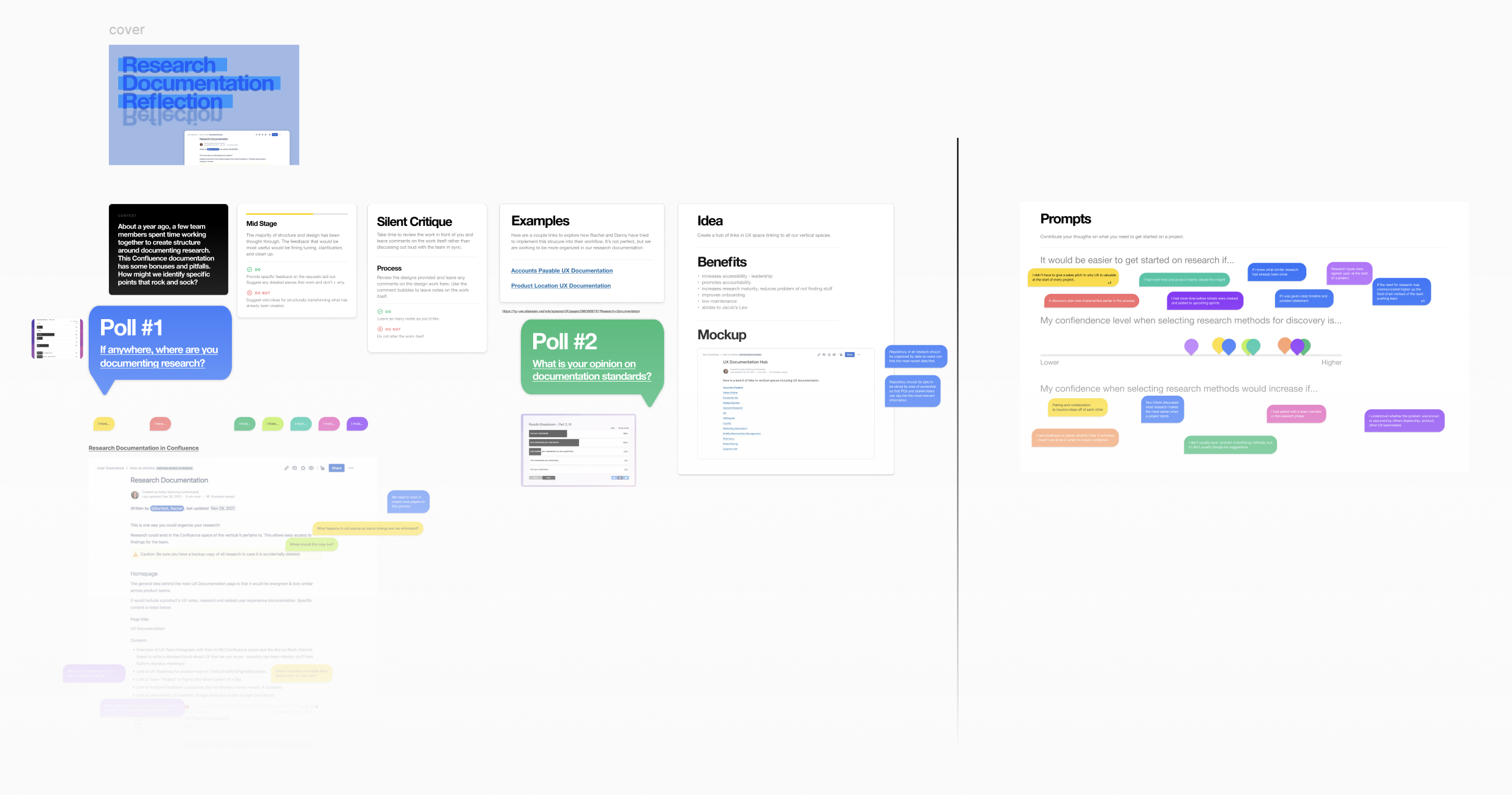
We brought employees who hadn't been actively participating in feedback into a large retrospective workshop to understand what was working, where friction remained, and what we'd missed the first time around.
It was a useful reminder:
The people speaking the loudest aren't always the people experiencing the most.
18
DEPARTMENTS
A shared framework connected teams with very different workflows and needs.
3
UX TEAM MEMBERS
A small team designed and supported a system intended to scale far beyond itself.
WHAT I TOOK FROM IT
Information architecture is easy to think about as folders, labels, and navigation.
But the deeper problem is human.
How does an organization remember?
How does one person find what another person created six months ago?
How does knowledge survive when people move teams?
How do you create consistency without taking away autonomy?
The best internal systems don't simply organize information.
They help people think together.
MORE WORK
Finding what you're looking for
Product Location Findability →
When the system gets in the way
Insurance Operations →
Rewriting the rules of an old system
Grocery Item Pricing →
Designing for people in a hurry
Convenience Store Checkout →
LET’S WORK TOGETHER
Have a complex system that needs to make more sense?